
How European Handball Grew From Field Games to the EHF EURO
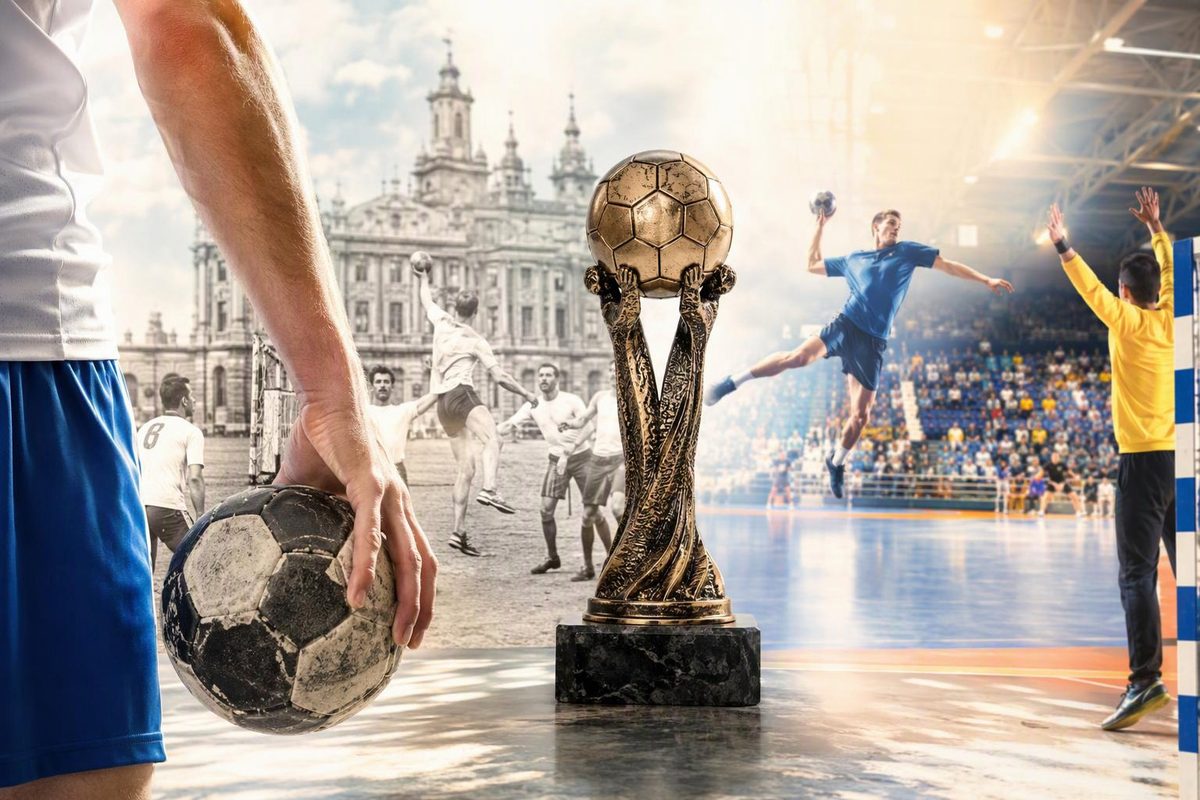
Trace European handball’s roots, the rise of the Champions League and EHF EURO, and the competition changes that matter when comparing results.
European handball’s history has two distinct strands: the development of the sport in northern and central Europe around the turn of the 20th century, and the creation of the European Handball Federation (EHF) in 1991. The game long predates the organisation that now runs its major European club and national-team competitions.
For readers comparing results, the important changes are not just who won. They are the move from field handball to the indoor game, the creation of new competitions, and changes to tournament size and format.
European roots and the move indoors
Modern handball developed from several related ball games rather than a single invention. The International Handball Federation (IHF) identifies Denmark and Germany as early centres, citing Danish rules published in 1906 and modern German rules in 1917. The IHF itself was founded in Denmark in 1946. IHF historical overview.
Field and indoor handball initially existed alongside one another. Women’s world-title competition began outdoors in 1949, with the first women’s World Championship classified as an indoor edition taking place in 1957. That 1957 tournament was actually played in the open air—a useful reminder that “indoor” can identify the form of the game rather than its venue. IHF women’s championship history.
For the wider chronology, including the World Championship and Olympic milestones, see our history of handball. The European competition story below focuses on the EHF era.
The EHF and European club competition
The EHF was founded in Berlin in 1991, and its office opened in Vienna on 1 September 1992. In 1993, it took over European club competitions previously organised by the IHF. The top competitions changed from the IHF Champions Cup to the EHF Champions League for 1993/94. European club handball therefore did not begin with the Champions League name; that season began a new organisational era. EHF institutional history; Champions League retrospective.
The men’s Champions League initially had an eight-team group phase after qualification, with the two group winners advancing to the final. TEKA Santander won the first edition in 1994. Spanish clubs won all of the first eight editions, including Barcelona’s five consecutive titles from 1996 to 2000. EHF Champions League retrospective.
A major format change arrived in 2009/10, when the men’s competition introduced the FINAL4 in Cologne. It brought the semi-finals and medal matches together at a single-venue final weekend: the first edition staged its semi-finals on 29 May 2010 and its final and third-place match the next day. EHF retrospective; inaugural FINAL4 schedule.
When reading club records, distinguish a single match from a two-leg tie. An aggregate score is not a match total.
The European Championship began in 1994
The EHF EURO is a national-team competition, separate from the club Champions League. Its first senior tournaments took place in 1994: the men’s in Portugal in June and the women’s in Germany in September. Both had 12 teams. Men’s EURO history; women’s EURO history.
The inaugural finals show why scoring volume and winning margin should be read separately. Combined goals means both teams’ goals added together; margin means the winner’s goals minus the loser’s.
| First EHF EURO final | Result | Combined goals | Winning margin |
|---|---|---|---|
| Men, 1994 | Sweden 34–21 Russia | 55 | 13 |
| Women, 1994 | Denmark 27–23 Germany | 50 | 4 |
Sources: official men’s EURO history and women’s EURO history. The combined totals differ by only five goals, but the men’s final was much more one-sided. Two finals alone do not establish a scoring trend.
Sweden won four of the first five men’s EUROs, from 1994 through 2002. Denmark won the first two women’s editions; Norway later won four consecutively from 2004 through 2010. These are separate competitive histories, not one shared European title record. Men’s and women’s tournament histories.
Both tournaments expanded to 16 teams in 2002. The men’s field grew to 24 in 2020, while the women’s reached 24 in 2024. Expansion changes the participating field and match programme, so raw tournament goal totals are not a clean measure of scoring growth. Men’s history; women’s history.
How to compare historical results
Keep the competition, sex, age category and match duration consistent. Separate field handball from the indoor game, club results from national-team results, and regulation scores from extra-time totals.
For example, Hungary’s 32–30 win over Ukraine in the 2000 women’s EURO final contained 62 goals, but the regulation score was 26–26: 52 goals. Treating all 62 as a 60-minute total would overstate the scoring rate. Official women’s EURO history.
For a closer look at those comparisons, use our EHF EURO final goals by year, keeping men’s and women’s results—and extra time—identifiable.