
How Long Are World Cup Games? 90 Minutes in Football, 60 in Handball
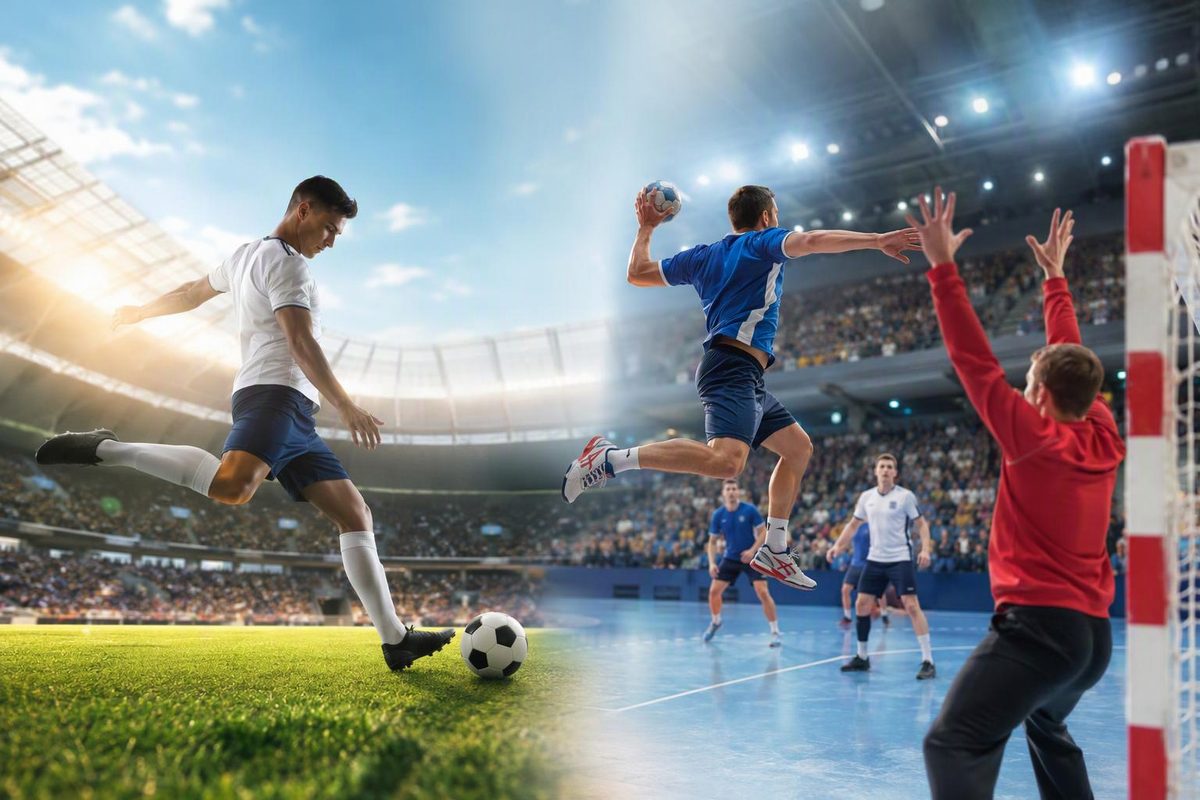
World Cup football games last 90 minutes; senior handball games last 60. See how half-time, stoppages, extra time and shootouts affect duration.
Football World Cup games last 90 minutes of regulation time, split into two 45-minute halves. Senior indoor handball World Championship games last 60 minutes, split into two 30-minute halves. Neither figure includes half-time, and a tied knockout match can last longer. These playing times are set out in football’s Law 7 and handball’s Rule 2.
The important distinction is match-clock time versus elapsed time: a 60-minute handball game does not finish an hour after throw-off.
Football: 90 minutes, plus added time
In football, the referee adds time at the end of each half to account for substitutions, injuries, time-wasting, goal celebrations, VAR delays and other interruptions. The board shows the minimum added time; the referee can increase it. Half-time is separate from the 90 minutes and cannot exceed 15 minutes under IFAB’s Law 7.
World Cup group matches can finish as draws. A knockout match tied after regulation and added time goes to two 15-minute halves of extra time, bringing the scheduled playing time to 120 minutes. If it remains level, a penalty shootout decides the winner. ESPN’s World Cup rules guide describes that sequence, consistent with the permitted tie-breaking procedures in IFAB’s Law 10.
Breaks, added time and any shootout make the elapsed duration longer still; 120 minutes is not a maximum viewing time.
Handball: 60 minutes, plus a 15-minute interval and stoppages
The senior men’s and women’s IHF World Championships use the same playing duration. Their half-time interval is 15 minutes, under the IHF competition regulations. That makes 75 minutes for regulation play and the interval alone, before clock-stopped interruptions.
Unlike football’s added-time system, handball stops its official clock for time-outs. A stoppage is mandatory when a two-minute suspension or disqualification is awarded, or a team time-out is granted; referees can also stop the clock in other circumstances. The suspension itself runs during playing time—not as a two-minute pause in the match. Not every whistle stops the clock. Each team at the senior World Championships may receive up to three one-minute team time-outs during regulation, but none in overtime. Rule 2 and the competition regulations govern these interruptions.
What happens when a handball game is tied?
Preliminary-round, main-round and President’s Cup group games can end in draws. For senior World Championship knockout matches other than the exceptions below, the standard sequence is:
| Stage | Playing duration | Total match-clock time |
|---|---|---|
| Regulation | Two 30-minute halves | 60 minutes |
| First overtime period, if still tied | Two five-minute halves | 70 minutes |
| Second overtime period, if still tied | Another two five-minute halves | 80 minutes |
| Still tied after both overtime periods | Seven-metre shootout | No fixed shootout duration |
Each overtime period follows a five-minute break and has a one-minute interval between its halves. President’s Cup placement matches for positions 25–32 go directly to a seven-metre shootout if tied after regulation. The IHF can also announce direct-shootout arrangements for specified matches. These details come from the senior World Championship competition rules.
Why duration matters when comparing handball scores
Overtime gives teams more time to score, so a higher final total does not necessarily mean a faster game.
For a hypothetical example, 60 combined goals over 60 minutes equals 1.00 goal per match-clock minute. A 70-goal game lasting 70 minutes has exactly the same rate. Separate regulation and overtime before comparing scoring pace—and keep shootout throws separate from goals scored during play.
That distinction is especially useful when reading World Championship final goal totals: establish how long the match lasted before interpreting how high-scoring it was.