
Hungary beat Sweden 34–32: how the 2026 U20 final reached overtime
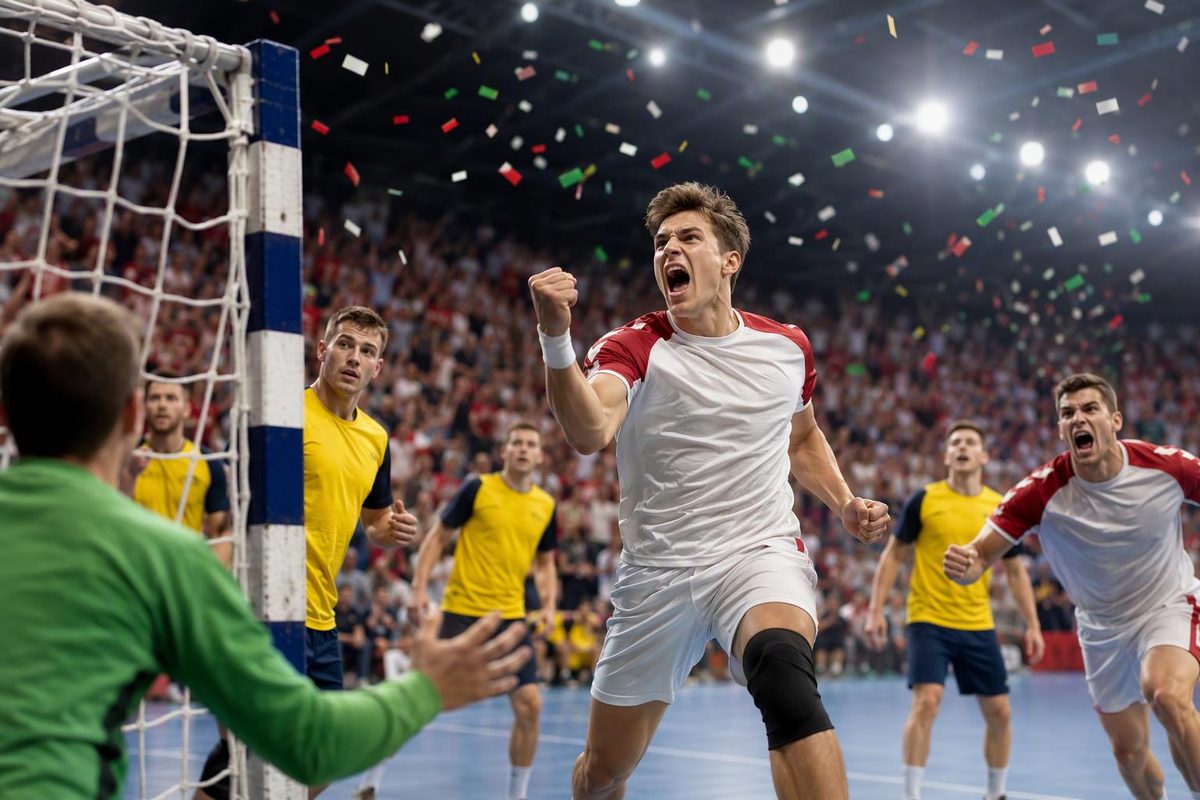
Hungary won the 2026 men's U20 European final 34–32 after a 28–28 regulation draw. Follow the comeback and see what overtime adds to the scoring total.
Hungary beat Sweden 34–32 after overtime in the 2026 Men’s 20 EHF EURO final on 19 July, winning their first title in the competition. The regulation score was 28–28, not 30–30: that later tie came after the first five minutes of extra time. This was the men’s under-20 European Championship, not the senior EURO. (EHF final-day coverage, IHF tournament review)
From a two-goal deficit to the title
Sweden led 16–15 at half-time at BT Arena in Cluj-Napoca, Romania. With less than three minutes remaining, Måns Fredriksson put Sweden 28–26 ahead. Hungary scored the last two goals of regulation; Máté Fazekas equalised with 30 seconds left, and Sweden failed to score on their final opportunity. (EHF match report)
The score sequence separates the late comeback from the overtime win:
| Match stage | Sweden | Hungary |
|---|---|---|
| Half-time | 16 | 15 |
| Less than three minutes left in regulation | 28 | 26 |
| End of regulation: 60 minutes | 28 | 28 |
| After the first five minutes of overtime | 30 | 30 |
| After the full ten minutes of overtime | 32 | 34 |
Sources: EHF match report and IHF review.
Each team scored twice in the first overtime period. Hungary then won the second five-minute period 4–2, with the EHF report highlighting crucial saves by Ádám Kristóf Balogh. Across overtime as a whole, Hungary outscored Sweden 6–4. There was no penalty shoot-out.
Why 66 goals is not a 60-minute scoring total
The completed result contains 66 combined goals, but ten of those arrived in extra time. For scoring comparisons, the relevant figures are:
- Regulation: 56 goals in 60 minutes — approximately 0.93 combined goals per minute.
- Overtime: 10 goals in 10 minutes — 1.00 combined goal per minute.
- Whole match: 66 goals in 70 minutes — approximately 0.94 combined goals per minute.
These are calculations from the official score sequence above. The whole-match rate equates to approximately 56.6 combined goals per 60 minutes, close to the actual regulation total of 56. The 66-goal headline therefore reflects extra playing time much more than a substantially faster scoring rate.
It also cannot establish possession pace or team shooting efficiency by itself: those require attack and shot counts, not just elapsed time and goals.
Gazsó’s contribution—and the reversed result
Péter Gazsó scored 14 goals from 18 attempts, according to the EHF report: approximately 77.8% shooting conversion and 41% of Hungary’s 34 goals. Fredriksson led Sweden with nine goals from 13 attempts. Those are individual shooting figures, not team-wide conversion rates. (EHF match report)
The result also reversed the teams’ main-round meeting, which Sweden had won 40–24. Hungary’s title was thus secured through two distinct steps: erasing a late regulation deficit, then winning the final five minutes of overtime. (IHF review)